Postdoctoral union organizing

Ceiling of Sterling Memorial Library
March 26, 2026
To: All Yale Faculty 
 
[Summary: Local 33-UNITE HERE, which represents Yale’s Graduate Workers, has campaigned to represent Yale’s postdoctoral associates and Yale-employed postdoctoral research fellows under a separate contract. The university has secured the union’s agreement to a framework that would support the university’s research and education missions in any future collective bargaining agreement, should the union win the election.]
 
Dear Colleagues,
 
Over the past several months, Local 33-UNITE HERE, the union representing Yale’s Graduate Workers, has campaigned to represent Yale’s postdoctoral associates and Yale-employed postdoctoral research fellows (“postdocs”) under a separate contract. Local 33’s organizing efforts follow those at other institutions of higher education, including many of our peers, where postdoctoral unions have been established. Today, we write with an update on these efforts at Yale. Postdocs will receive information directly from Local 33.
 
A Private Election Agreement
 
Last year, Local 33 informed the university that it had collected union authorization cards from a majority of Yale-employed postdoctoral associates and postdoctoral research fellows. Based solely on these cards, the union proposed that the university recognize Local 33 as the postdocs’ exclusive bargaining representative. Yale declined to grant this recognition but suggested it would consider a private election overseen by a neutral third party. A private election process ensures that all eligible postdocs may vote by secret ballot on whether to designate Local 33 as their exclusive bargaining representative.  
 
Through this approach, the university secured Local 33’s agreement to a framework that would support Yale’s research and education missions in any future collective bargaining agreement, should the union win the election. This is an outcome Yale could not have achieved through a traditional National Labor Relations Board (NLRB) election process.
 
The framework includes commitments that are important and beneficial to faculty and the work of the university. Among other things, these commitments: 
 
  • preserve the university’s core management rights,
  • decouple the postdocs’ contract period from that of the Graduate Workers’ contract,
  • maintain operational flexibility by ensuring postdoctoral employee schedules are based on the needs of their research project(s), 
  • retain the university’s flexibility in making postdoc appointments and reappointments, and
  • protect university leaders’ and faculty members’ free speech rights consistent with the National Labor Relations Act (NLRA), including the right to speak with individual postdocs about unionization within the bounds of labor law.
Through this framework, Yale and Local 33 have also committed to considering certain terms found in the existing Graduate Worker contract that have been helpful to the university, including grievance procedures, fair treatment workplace accommodations, evaluations, and more, to help streamline any future collective bargaining process with postdoctoral employees. 
 
What Comes Next
 
For an election to take place, the union must now present to a third-party arbitrator signatures representing more than 50 percent of union-eligible postdocs. This is a greater proportion than what is needed to authorize an NLRB election, which would require the signatures of 30 percent of eligible postdocs. 
 
If Local 33 presents the required number of signatures, Yale will work with union leadership and the arbitrator to facilitate a fair and representative election this spring. If eligible postdocs vote in favor of representation, the university will grant the union recognition and enter into negotiations toward a collective bargaining agreement. If postdocs vote against representation, Yale will not be required to recognize the union, and the Office for Postdoctoral Affairs will continue to handle postdoc employment-related matters.
 
Guidance and FAQs
 
Additional details are available in the FAQs below, and we will provide updates as they become available. In the meantime, please review the unionization information sheet available under the “Training and Resources” section of the Local 33 Labor Agreement and Resources webpage, which provides important guidance about legally permissible and prohibited conduct during a union organizing campaign.
 
Thank you in advance for your continued commitment to supporting Yale’s postdocs and the university’s research and education missions. As our community discusses the possibility of postdoctoral unionization, please continue to promote civil, respectful dialogue that recognizes the contributions of all our community members.
 
Sincerely,
 
Scott Strobel
Provost
Henry Ford II Professor of Molecular Biophysics and Biochemistry
 
Lynn Cooley
Vice Provost for Postdoctoral Affairs
Dean of the Graduate School of Arts and Sciences
C. N. H. Long Professor of Genetics and Professor of Cell Biology and of Molecular, Cellular, and Developmental Biology
 

FAQs

What guidance does the university have for faculty?
Please refer to the unionization information sheet available under the “Training and Resources” section of the Local 33 Labor Agreement and Resources webpage.
 
What is a Private Election Agreement (PEA)? 
A Private Election Agreement sets forth the terms and conditions of an election overseen by a neutral third party other than the National Labor Relations Board (NLRB), usually an arbitrator, to determine whether eligible postdocs want to be represented by the union for purposes of collective bargaining. A PEA allows postdocs to submit secret-ballot votes indicating whether they wish to be represented by the union. While the election is not run by the NLRB, the procedures are similar, though the agreement permits the parties to tailor the election to their particular needs, separate from additional requirements imposed by the NLRB. PEAs have been used by a number of universities.  
 
Why did the university agree to consider a private election?
In the absence of a Private Election Agreement, Local 33 would have likely submitted a petition for a union election to the NLRB. This would have left the university and union without an opportunity to discuss, in advance of an election, a framework to align any ultimate agreement with the university’s research and education missions. The university also wanted to ensure that postdocs retained their freedom to vote in a secret ballot election. 
 
How will a private election be authorized?
In accordance with Yale’s agreement with the union, to authorize an election, a majority of the eligible postdoctoral population must sign cards indicating their desire for Local 33 to represent them. This is a higher standard than used in elections facilitated by the NLRB; to authorize those elections, only 30 percent of the population must sign cards.  
 
If the union meets the required card threshold, who will run the election? 
If the union meets the required threshold, the election will be run by a neutral, third-party election overseer. 
 
How many votes will be needed for the union to win?
In accordance with Yale’s agreement with the union, the university will grant recognition to Local 33 if a majority of eligible, voting postdocs vote in favor of union representation.  
 
What happens if the union wins the election?
If the union wins the election, the university will recognize Local 33 as the exclusive bargaining representative for eligible postdocs and will negotiate in good faith with the union over the terms of a collective bargaining agreement in line with the framework the parties agreed to. 
 
What happens if the union does not win the election?
If postdocs vote against representation, Yale will not be required to recognize the union, and the Office for Postdoctoral Affairs will continue to handle postdoc employment-related matters.
 
Who would be eligible for union representation?
The bargaining unit would be limited to postdoctoral associates and postdoctoral research fellows employed (i.e., paid) by Yale. It will not include clinical fellows, whether employed by Yale School of Medicine (YSM) or Yale New Haven Health (YNHH). 
 
What other institutions have postdoctoral bargaining units? 
Postdoctoral bargaining units have been organized in many private institutions. Brown, Caltech, Columbia, Mount Sinai, and Weill Cornell Medicine have all entered into collective bargaining agreements with unions representing postdocs, and Albert Einstein, Harvard, Johns Hopkins, Penn, Princeton, and Rockefeller are in the process of negotiating first contracts with unions representing their postdocs. 
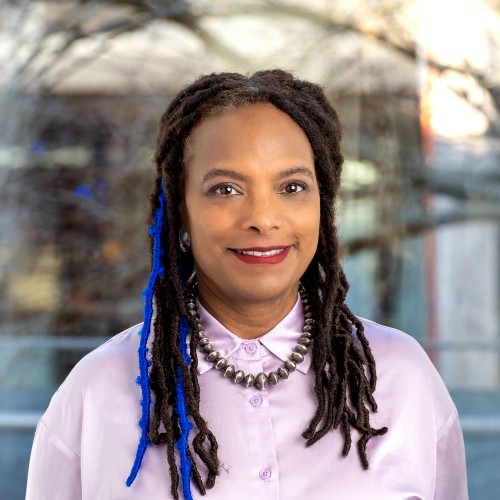
 

Kymberly Pinder reappointed dean of Yale School of Art

Kymberly Pinder
March 23, 2026

Dear Members of the Yale School of Art Community,

We are pleased to announce that the Yale Corporation has approved the reappointment of Kymberly Pinder, professor of art, as the Stavros Niarchos Foundation Dean of the Yale School of Art for a second term of five years, effective July 1, 2026. This renewal recognizes Dean Pinder’s success in strengthening the school’s organizational structure, securing transformative support for the student experience, and forging strategic collaborations that elevate the school’s reputation.

In her five-year tenure, Dean Pinder has fortified the School of Art’s operational structure to support a robust faculty and student experience. Under her leadership, the school has grown its faculty and staff capacity, making it possible to open a dedicated space for Yale College art majors at 53 Broadway and to reopen 32 Edgewood as a gallery. Meanwhile, the graduate school curriculum has expanded to include instruction in key areas such as financial literacy and grant writing, improving students’ preparedness for lives and careers in the field. Additionally, a new faculty affairs portfolio has led to increased support for non-tenure-track faculty research.

Since 2021, the School of Art has enhanced arts education and community building. Under Dean Pinder’s leadership, the school has hosted Interdepartmental Day, offering to students and faculty courses, critiques, and programming that foster interdisciplinary learning and exchange. School-wide initiatives—including an annual reading exercise, convocation, and weekly wellness gatherings—have built community among faculty, students, and staff.  

Dean Pinder has also demonstrated exceptional commitment to fundraising for financial aid and new academic opportunities. She has overseen the launch of an ambitious campaign to make the master of fine arts (M.F.A.) program debt-free for all students with demonstrated financial need, a vision that redefines access to graduate arts education. To date, she has raised $13 million and secured funding to support twenty scholarships and an additional twenty student opportunities, including awards and residencies for artists in locations such as Singapore, Lagos, and Italy. As of 2023, every M.F.A. student receives funds to help realize their thesis exhibition.

Across Yale and within New Haven, Dean Pinder has formed dynamic partnerships, positioning the School of Art as an active catalyst in local civic life and urgent global conversations. Most recently, she taught a class that culminated in Yale College students designing and installing a mural at the Yale Peabody Museum, drawing on contributions from New Haven residents. In collaboration with the School of Management, she also opened a new community gallery space at 63 Audubon. This new venue features community- and student-organized exhibitions and connects the university to New Haven’s vibrant arts district. 

Dean Pinder’s commitment to community engagement is further exemplified by the School of Art’s collaboration with the School of the Environment, the School of Architecture, and the city of New Haven. With grant funding from Yale Planetary Solutions, these partners have installed public murals around the city, drawing attention to the disproportionate impacts of climate change on under-resourced communities. Their initiatives also include a mural-making apprenticeship program for local artists. 

We are grateful to everyone who provided input to the reappointment review process. Many of you who contacted us remarked on Dean Pinder’s expansive commitment to creating community within the School of Art, at the university, and in New Haven. We also heard consistent praise for Dean Pinder’s visionary and inspirational leadership. Students specifically commented on her accessibility and advocacy on their behalf, and faculty, staff, and alumni commended her work toward the school’s goal of offering a debt-free M.F.A. and, eventually, a tuition-free program. Many remarked on her humanistic values and deep understanding of the significance of the arts in higher education and in the world overall.

Dean Pinder’s first term as dean has demonstrated her devotion to the School of Art community and its ongoing excellence. Please join us in congratulating her on her reappointment and thanking her for her willingness to continue serving the school and Yale. 

Sincerely,

Maurie McInnis
President
Professor of the History of Art

Scott Strobel
Provost
Henry Ford II Professor of Molecular Biophysics and Biochemistry 

Indy Burke reappointed dean of Yale School of the Environment

Indy Burke
March 23, 2026

Dear Members of the Yale School of the Environment Community,

We are pleased to announce that the Yale Corporation has approved the reappointment of Indy Burke, professor of ecosystem ecology, as the Carl W. Knobloch, Jr. Dean of the Yale School of the Environment (YSE) for a third term of five years, effective July 1, 2026. This renewal recognizes Dean Burke’s success in strengthening YSE’s position as a leader in interdisciplinary environmental research and practice, increasing support for students, and extending the school’s global reach.

Dean Burke, a noted ecosystem ecologist and biogeochemist, has brought a highly effective mix of the aspirational and the practical to her tenure as dean. In her second term, she has led efforts to advance next-generation environmental leadership and to expand scholarship support through two transformative programs. The Bekenstein Climate Leaders Program, founded in 2024, aims to increase the number of YSE and Yale graduates working to address the climate crisis and accelerate the pace and scale of climate change mitigation. The Three Cairns Climate Program for the Global South, which welcomed its third cohort of scholars to campus last fall, reduces barriers to advanced environmental education and training for emerging climate leaders from the Global South.

In recent years, YSE has also launched five new online certificate programs—in urban climate leadership, clean and equitable energy development, environmental data science, green chemistry, and strategic climate change communication—expanding educational and training opportunities for environmental professionals worldwide.

Under Dean Burke’s leadership, YSE—which celebrated its 125th anniversary last year—has reinforced its traditional strengths while fervently pursuing new areas of inquiry. Faculty appointments in tropical forest ecology, temperate forest resilience, and disturbance ecology and ecosystem dynamics have enhanced YSE’s historic expertise in forest and ecosystem science. Additional faculty recruits in areas of emerging importance—including water resource management and policy, urban planning and data science, climate migration, and sustainable resource use—have enriched these programs. Meanwhile, Dean Burke has advanced the school’s commitment to building a world-class environmental justice program. 

Dean Burke has also led YSE in forging new strategic partnerships and developing the knowledge and leadership needed to address today’s urgent global challenges. Interdisciplinary teams across YSE have worked with external partners to advance the scientific integrity of voluntary carbon markets, develop a comprehensive sustainability agenda for the international trade system, and mitigate the environmental impacts of artificial intelligence. YSE continues to grow its urban, environmental data science, and environmental communications initiatives, increase support for its doctoral program, facilitate the school’s expansion into the Prospect Street wing of Osborn Memorial Laboratories, and cultivate its expertise across the broad field of climate science.

We thank all of you who provided input on the reappointment review process. Based on your comments, there is a clear consensus, both within and beyond the YSE community, that Dean Burke has been an outstanding and “transformative” leader. Colleagues noted her prioritization of research excellence, her mentorship of junior faculty, and her exceptional success in raising the school’s national and international profile. Others expressed deep appreciation for Dean Burke’s thoughtful and collaborative leadership style, and for her outstanding track record of fundraising to advance YSE’s mission.

We are grateful to Dean Burke for her willingness to continue providing visionary leadership to the YSE and Yale community. Please join us in congratulating her on her reappointment and in thanking her for her steadfast service. 

Sincerely,

Maurie McInnis
President
Professor of the History of Art

Scott Strobel
Provost
Henry Ford II Professor of Molecular Biophysics and Biochemistry 

Deborah Berke reappointed dean of Yale School of Architecture

March 23, 2026

Dear Members of the Yale School of Architecture Community,

We are pleased to announce that the Yale Corporation has approved the reappointment of Deborah Berke, J.M. Hoppin Professor of Architecture, as the Edward P. Bass Dean of the Yale School of Architecture for a third term of five years, effective July 1, 2026. This renewal recognizes Dean Berke’s success in advancing the school’s impact on students, the Yale and New Haven community, and the future of the architecture profession.

Over the past decade, Dean Berke has deeply influenced the direction of architectural education at Yale and demonstrated a particular commitment to expanding the School of Architecture’s connections to Yale College and the other graduate and professional schools. In 2019, the School of Architecture launched an undergraduate major in urban studies, attracting large enrollments in introductory classes and a strong cadre of majors. The program has connected undergraduates with students in the school’s master of architecture program and has created new pathways for graduate students to incorporate urban studies into their education.

In addition to deepening ties across Yale, Dean Berke has also strengthened the school’s connection to New Haven. Her support for signature programs such as the Jim Vlock First Year Building Project and the Yale Urban Design Workshop has increased student and faculty engagement with the city through the construction of affordable housing and historic preservation efforts. Recent projects have given students opportunities to develop skills in the field, build relationships with local non-profit clients, and address issues such as urban infill and the need for climate-resilient buildings. 

Under Dean Berke’s leadership, the School of Architecture has extended its research and teaching to include the impact of architectural practice on the planet. In 2019, the school became home to the Yale Center for Ecosystems in Architecture, a faculty-led initiative connecting researchers from across the university to develop design methods that prioritize a sustainable built environment. The center now offers a doctoral research track that emphasizes interdisciplinary science and prepares students to engage with living ecosystems. In addition to seminars and studios focused on sustainable design, all School of Architecture courses integrate this topic into their discussions.

Dean Berke’s commitment to advancing the School of Architecture’s mission is evident in the robust support she has secured for students, faculty, and programs. Throughout her tenure, she has raised $135 million, resulting in a tripling of the school’s financial aid, progress toward meeting the demonstrated tuition needs of all students, and key endowment support for faculty, research, and the school’s hallmark centers and programs. New faculty positions in architectural sciences, design, urban studies, landscape, and history and theory have greatly expanded the school’s leadership in architectural education.

Notably, Dean Berke has continued the long tradition of the deanship by simultaneously leading an internationally renowned architectural practice. Embodying the school’s mission to cultivate leaders who shape the future through design, she has been recognized with the 2022 AIA/ACSA Topaz Medallion for Excellence in Architectural Education and the 2025 AIA Gold Medal—the highest honors in the United States for architectural education and professional practice, respectively.

During the reappointment review process, we heard effusive praise and deep appreciation for Dean Berke’s exceptional leadership from across the School of Architecture community. Faculty, staff, students, and alumni commented on her calm, steady presence during challenging times as well as her ongoing dedication to visionary and strategic thinking. Many of you remarked on the highly collaborative and inclusive environment that Dean Berke has created and praised her commitment to the highest academic standards for architectural education and scholarship. 

We are grateful to Dean Berke for her dedication to the School of Architecture’s mission and her impressive record of accomplishments. Please join us in congratulating her on her reappointment and thanking her for her work to strengthen the school and Yale. 

Sincerely,

Maurie McInnis
President
Professor of the History of Art

Scott Strobel
Provost
Henry Ford II Professor of Molecular Biophysics and Biochemistry 

Responding to the Federal Government Shutdown

October 2, 2025

Dear Members of the Yale Community, 

On Wednesday, October 1, the U.S. government entered a shutdown, disrupting operations across federal agencies and services. 

This shutdown may impact some parts of our university community. Information on financial aid and student services; research grants and projects; immigration services, visas, and E-Verify; and travel is below. Please reach out to the listed resources for guidance on your specific situation. 

The university will continue to monitor developments closely, and as the shutdown progresses, campus leaders will share additional updates that are relevant to the community. 

Sincerely, 

Scott Strobel
Provost
Henry Ford II Professor of Molecular Biophysics and Biochemistry


Financial Aid and Student Services

Pell Grants and other student financial aid awards will be available for disbursement, as most student financial aid programs are appropriated a year in advance.    

Many federal contract staff who handle student loan services and collect student loans have been pre-funded, and borrowers are expected to continue repayment throughout a shutdown. Students with outstanding or incomplete FAFSAs—or other outstanding federal financial aid requirements—should complete and submit these forms as soon as possible.     

We anticipate that Veterans Affairs will largely be unaffected, and veterans receiving education benefits should see no interruptions in funding. However, the Education Call Center (GI Bill Hotline), career counseling (including Veteran Readiness and Employment services), and Transition Assistance Programs will experience a lapse in function.

Students with questions about financial aid may contact their financial aid office

Research Grants and Projects

Work funded by currently active federal research grants should continue if awards have unexpended funds. Electronic systems for new grant submissions and progress reports are expected to remain accessible, although agencies will not review applications until they reopen. Agencies may suspend work on research contracts on a case-by-case basis. Investigators will be directly notified if a stop work order is issued on a federal grant or contract.

Additionally, agencies will likely furlough program officers and suspend the review of new grant or fellowship applications. The Office of Research Administration has been communicating with deans and business offices to provide guidance and will continue to give updates to this community. 

A small number of researchers are personally funded by grants from the federal government. These investigators will be contacted by their units if they are likely to be impacted.   

Questions about research grants and projects may be referred to the Office of Sponsored Projects.

International Students and Scholars

The U.S. Citizenship and Immigration Service (USCIS) will continue to process applications. The Department of State’s (DoS) consular offices will continue to issue visas as long as visa application fee revenue is available. Processing delays may remain for both USCIS and DoS.

Employment-based Visas for Faculty, Postdocs, and Staff 

The Department of Labor’s Office of Foreign Labor Certification will suspend operations and will not certify Labor Condition Applications (LCAs), the first step in the processing of employment-based visas, such as H-1B visas. The Office of International Students and Scholars (OISS) may not be able to proceed with H-1B cases that have a pending LCA or require a new one, but USCIS can still adjudicate H-1B cases with an already-certified LCA. 

International students and scholars with visa-related questions should contact OISS for assistance.

E-Verify     

The E-Verify system, which allows employers to verify employment eligibility, will be inaccessible during a shutdown. Although E-Verify is suspended during a government shutdown, I-9 verifications for new hires can still be processed. The information will need to be input into the E-Verify system once the government reopens.    

Questions may be referred to Employee Services

Travel

Based on news reports, we understand that Amtrak will maintain operating service on the Northeast Corridor, and air traffic controllers and TSA (Transportation Security Administration) security staff will maintain operations. 

Fall 2025 Financial Update

Fall leaves on Yale's campus
September 30, 2025

This message provides an update on the impact of federal actions on Yale’s budget, and it outlines the steps the university is taking to address this challenge. Key highlights:

  • The federal tax on university endowment income will have a significant impact on Yale’s budget.
  • Schools and units have been asked to achieve budget reduction targets within a three-year period. 
  • The university hiring pause will conclude on September 30, 2025, allowing hiring efforts to gradually resume on October 1. 
  • The university will offer a new one-time retirement incentive program for managerial and professional (M&P) staff, which is intended to help units meet their budget reduction targets.

Dear Faculty and Staff Colleagues,
 
As promised in our August message, we write to update you on Yale’s financial position and reiterate information shared in today’s faculty and staff meeting
 
Like you, we are here because we believe in the university’s contributions to society, and we are deeply proud of the ways our community addresses urgent global challenges, provides lifesaving care, and deepens our understanding of the human experience. Every day, we witness how Yale’s work—the work all of you perform and empower—serves and strengthens our nation and world. 
 
As we adapt to new federal legislation and other challenges affecting Yale and higher education, our actions are guided by a profound commitment to the university’s mission. We are dedicated to ensuring that this mission endures and thrives, and with this goal in mind, we offer the following financial update.
 

Fiscal year 2025 financial results

First, we begin with positive news. In the fiscal year ending June 30, 2025, the university recorded a net surplus in operating results. Most of the surplus is distributed across individual schools, units, departments, labs, and programs. The remainder is held in central funds, which are used to support the university’s academic priorities and to provide a cushion for unexpected expenses.
 
We do not take these results for granted. Thank you for your careful stewardship of resources, which has led to these conditions and prepared us for the challenges ahead.
 

Fiscal year 2026 budget and the tax on endowment income (“endowment tax”)

Unfortunately, we are entering a period of significant financial headwinds. Federal actions are changing the landscape of higher education. These actions include an increase in the tax on the university’s endowment income, as well as cuts to federal support for research, student financial aid, and Medicaid. These changes will meaningfully reduce funds that comprise key parts of Yale’s budget.
 
In today’s update, we will focus on what is currently the most significant challenge before us: the tax on Yale’s endowment income. As described in previous messages, Yale’s endowment income is currently taxed at an annual rate of 1.4%. In July, Congress passed legislation that increased this tax to 8%, beginning July 1, 2026. 
 
This action marks a substantial increase in the money Yale must pay the federal government each year, resulting in a significant reduction in the funds we will have to support students, faculty, staff, and local partnerships. The tax is not a reduction in the university’s revenue; it is an ongoing expense of approximately $300 million per year, and one that will increase at roughly the rate the endowment grows. For more information, please refer to these FAQs.
 
This tax will significantly increase our expenses, and we must now identify ways to decrease costs in other parts of our budget. To address this challenge, we are introducing various measures.
 

Actions taken to date 

As outlined in our June memo, we have already taken several steps:
 
  • Each school and unit reduced non-salary expenses in the fiscal year 2026 budget by 5%. 
  • The university decreased by 1% the pool for faculty and managerial and professional (M&P) staff salary increases.  
  • We delayed several large capital building projects.
The first two actions resulted in $85 million in savings this year. This is a helpful start, though we have more work to do to address the remainder of the challenge posed by the endowment tax. 
 

Hiring pause

In addition to these strategies, our June message announced a ninety-day hiring pause, providing flexibility for schools and units to achieve budget reductions. Effective tomorrow, October 1, we will lift this pause, allowing hiring to resume. 
 
While units may now begin filling open positions, we urge careful and strategic decision-making as we move forward. Each vacancy represents a potential cost-saving opportunity. We have asked unit leaders to prioritize positions that are essential to maintaining academic excellence and advancing strategic institutional goals. 
 
For positions deemed critical to our mission, deans and lead administrators will prioritize which roles to fill first. We cannot move forward with all positions immediately, as the backlog created by the hiring pause will take several months to address once hiring efforts resume. 
 

Meeting new budget targets

Given the savings implemented in the actions described above, we will not ask units to revise their budgets for fiscal year 2026. Instead, they will adhere to budgets developed last spring. 
 
To address the remaining impact of the endowment tax, units will begin to meet new budget targets in fiscal year 2027, starting July 1, 2026, when the increased endowment tax will take effect. We have asked unit leaders to implement changes over a three-year period, providing flexibility as they prioritize work critical to pursuing their strategic goals and the university’s mission. This window will allow time to adjust, and it acknowledges that some units will need to continue supporting multi-year commitments that cannot end immediately. 
 
We are keenly aware that this process will be difficult, and the results will be felt across every part of Yale. During this period, we will utilize the university’s recent surplus and reserves that units and programs have set aside to cover short-term deficits; however, reductions will still be necessary. We must avoid delaying hard decisions and directly address this challenge as quickly as possible. 
 

Supporting schools and units as they respond to new budget targets

This fall, schools and units are actively engaged in the three-year planning exercise to reach their budget reduction targets. As this work progresses, university leaders, as well as faculty and staff members of the Budget Advisory Group, will examine how units will be impacted. Collectively, we will advise units as they make strategic choices that uphold Yale’s tradition of excellence in teaching, research, scholarship, preservation, and practice. 
 
We already know that some areas of the university will feel more strain than others. This is partly due to the different ways Yale’s schools and units are funded. While some rely on endowment income as their sole source of revenue, others are highly dependent on patient care revenue, grants and contracts, or tuition. 
 
As schools and units develop their plans, we will monitor and strategize how to support those that are more heavily impacted. We will also ensure that deans and other leaders receive guidance as they identify strategies for redistributing workload and restructuring operations in ways that preserve both our mission and the well-being of our community. In addition, we will continue to monitor federal actions, including potentially dramatic changes to facilities and administrative cost (F&A) reimbursement rates, which provide crucial research support, as well as the impacts of Medicaid cuts. These changes could significantly harm revenue streams that are critical to some schools. 
 

Additional opportunity to achieve budget targets: retirement incentive programs

While the work to reduce budget targets is underway, we will implement additional strategies to support cost-saving measures. 
 
Today, we are announcing a new one-time retirement incentive program for M&P staff in fiscal year 2026. More information will be emailed to eligible employees next week. The program will offer an additional option for staff who may be contemplating retirement, while also giving schools and units an opportunity to realize savings toward their budget targets. 
 
Yale’s existing contracts with Local 34, Local 35, and the Yale University Security Officers Association (YUSOA) also include a union retirement incentive program. More information is available through the Employee Service Center. Yale continues to offer a phased retirement program for faculty, and plan documents are available online.
 
***
 
In closing, Yale faces financial challenges that require difficult decisions and careful planning. Still, we are determined to navigate this period by sustaining what matters most: outstanding research and scholarship, education, preservation, and practice. We welcome your ideas and perspectives, and we invite you to share your input with us and other university leaders using this webform
 
Throughout its history, Yale has weathered tremendous challenges, each time adjusting, adapting, and responding with new ways to advance its mission. The path ahead requires us to address harsh realities, but with careful and thoughtful stewardship of our resources, we will continue to shape a future defined by resilience, innovation, and progress. 
 
Sincerely,
 
Scott Strobel
Provost and Henry Ford II Professor of Molecular Biophysics and Biochemistry
 
Jack Callahan, Jr.
Senior Vice President for Operations
 
Stephen Murphy   
Vice President for Finance and Chief Financial Officer

Stewarding Academic Freedom at Yale

Lux Et Veritas
March 3, 2026

A faculty committee will establish principles that guide faculty academic freedom at Yale.

Provost Scott Strobel has charged a new faculty committee with developing a clear, forward-looking statement that articulates the principles that guide the academic freedom of Yale faculty.

Composed of nine faculty members from across the university, the Committee on the Principles of Academic Freedom will build on Yale’s longstanding commitment to stewarding this essential university tenet—a foundation for advancing knowledge, critical thinking, and democratic values.

“At Yale, as at other universities, academic freedom is a sacred principle—as fundamental to our success in contributing to this nation and to humanity as the buildings and scholars within them,” said President Maurie McInnis. “Academic freedom has enabled American universities to flourish and expand our ambitions and impact with a relentless focus on excellence and the betterment of our country and humankind.”

Over the coming months, the committee will examine the historical, legal, and ethical foundations of academic freedom in higher education. To consider a broad range of viewpoints, committee members will also engage Yale faculty through a series of conversations, ensuring input is gathered from colleagues across the university.

By the end of the fall 2026 semester, the committee will deliver a written Statement on the Principles of Academic Freedom at Yale University, along with a brief report summarizing its process and findings. This work will help guide university leaders and faculty as they support a scholarly community defined by academic excellence and intellectual independence.

“Over the past year, President McInnis and I have engaged in important conversations about academic freedom, drawing on the insights and experiences of faculty, colleagues at peer institutions, and Yale’s own distinguished scholars in this space,” said Strobel, Provost and Henry Ford II Professor of Molecular Biophysics and Biochemistry. “This committee will help ground our collective understanding of academic freedom at Yale—and the faculty’s rights and responsibilities—in common principles. This effort serves to honor Yale’s legacy as a place of robust intellectual inquiry and to preserve the future of academic freedom on campus.”

The committee includes Anoka Faruqee, Professor of Art, Yale School of Art; Jennifer A. Herdt, Gilbert L. Stark Professor of Divinity, Yale Divinity School; Kathryn Lofton, Lex Hixon Professor of Religious Studies and American Studies, Faculty of Arts and Sciences; Chima D. Ndumele, Professor of Public Health (Health Policy), Yale School of Public Health; David Post, Professor of Ecology and Evolutionary Biology, Faculty of Arts and Sciences; Robert C. Post, Sterling Professor of Law, Yale Law School; Lynn Tanoue, Professor of Medicine (Pulmonary), Yale School of Medicine; and Keith E. Whittington, David Boies Professor of Law, Yale Law School.

Gregory Huber, Forst Family Professor of Political Science in the Faculty of Arts and Sciences, will serve as committee chair.

“Academic freedom is essential to the work of scholars, students, and, ultimately, the academic mission of universities,” said Professor Huber. “Our committee looks forward to engaging colleagues across the university as we articulate our understanding of academic freedom and how it supports robust and unfettered research, discovery, and the creation of knowledge.”


Committee Members

Gregory Huber (chair), Forst Family Professor of Political Science

Anoka Faruqee, Professor of Art and Associate Dean, Yale School of Art

Jennifer A. Herdt, Gilbert L. Stark Professor of Divinity and Senior Associate Dean of Faculty Affairs, Yale Divinity School

Kathryn Lofton, Lex Hixon Professor of Religious Studies and American Studies

Chima D. Ndumele, Professor of Public Health (Health Policy)

David Post, Professor of Ecology and Evolutionary Biology

Robert C. Post, Sterling Professor of Law

Lynn Tanoue, Professor of Medicine (Pulmonary)

Keith E. Whittington, David Boies Professor of Law

Subscribe to Front page feed